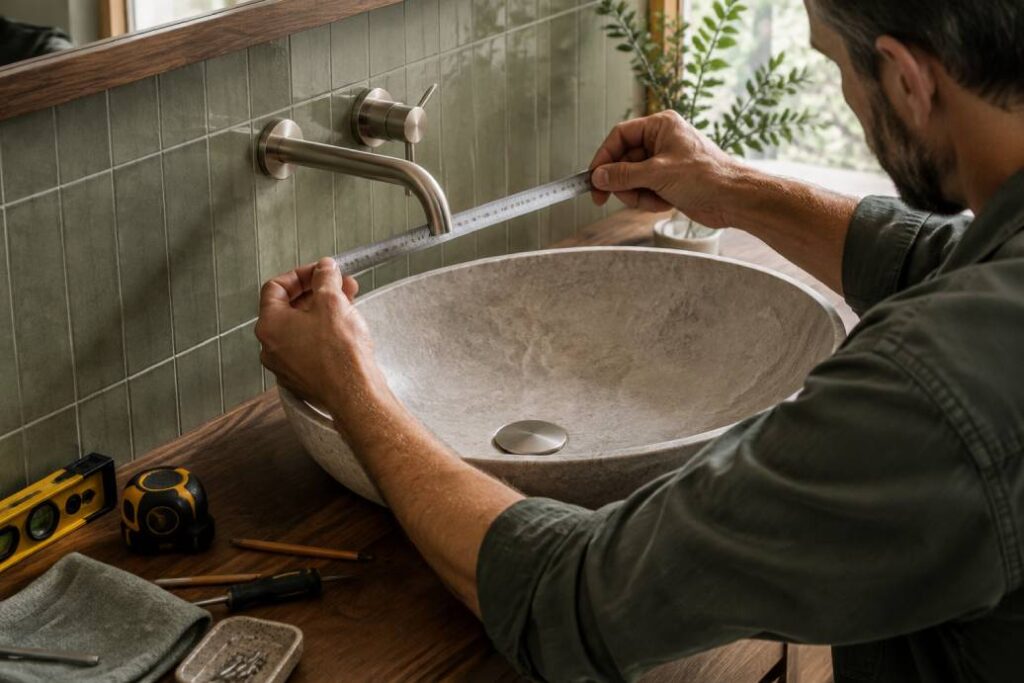
Have you ever noticed water splashing onto your bathroom countertop, mirror, or floor whenever you turn on the basin tap? While it may seem like a minor inconvenience, excessive water splashing can make your bathroom messy, increase cleaning effort, and affect the overall comfort of your daily routine.
Many homeowners assume that splashing is caused by high water pressure. However, the problem can also come from incorrect tap height, unsuitable spout positioning, or a mismatch between the tap and basin design.
Whether you have a vanity top basin, an undercounter basin, or a luxurious stone basin, understanding the causes of water splashing can help you create a more practical and comfortable bathroom.
Why Does Your Basin Tap Splash Water?
A basin tap should deliver water smoothly into the basin without creating unnecessary splashes. However, when the water flow, tap position, and basin shape are not properly matched, water can bounce off the surface and spread beyond the basin.
This issue is especially common when homeowners choose bathroom fittings based mainly on appearance without considering product compatibility.
A beautifully designed tap may complement your bathroom style, but the way water flows into the basin matters just as much as how the tap looks.
Understanding the following common causes can help you identify the problem and choose the right solution.
1. Your Basin Tap Is Installed Too High
One common cause of water splashing is excessive distance between the tap spout and the basin surface.
When water falls from a greater height, it can hit the basin with more force and scatter in different directions. This becomes more noticeable when the basin is shallow or has a relatively flat bottom.
For example, a tall basin mixer may look elegant when paired with a vanity top basin. However, if the tap is positioned too high above the basin, water may splash onto the surrounding countertop.
How to prevent it:
Choose a basin tap with a suitable spout height for your basin. Before installation, check the vertical distance between the spout and the basin’s interior, rather than focusing only on the tap’s overall height.
A well-matched tap should provide enough space for comfortable handwashing without allowing water to fall unnecessarily far.
2. The Water Flow Hits the Wrong Part of the Basin
Another common mistake is incorrect spout reach.
Spout reach refers to how far the basin tap extends over the basin. If the spout is too short, water may hit the inner wall near the back of the basin. If it extends too far, the stream may land close to the front edge.
Both situations can cause unnecessary splashing.
Ideally, water should flow into a suitable deeper area of the basin without directly striking a steep sidewall or hard drain cover.
How to prevent it:
Before purchasing a tap, measure the distance from the installation position to the intended water landing point.
For countertop basins, consider the relationship between the tap hole, countertop edge, and basin dimensions. This helps ensure the water stream falls in a practical position during everyday use.
3. Excessive Water Pressure or Flow Rate
Even when your basin tap is correctly installed, excessive water flow can still cause splashing.
A strong stream hitting the basin surface may create more splashes than a controlled flow. This is particularly noticeable in compact bathrooms with smaller or shallower basins.
Some homeowners may experience this issue after replacing an older tap with a different mixer that delivers water at a higher flow rate.
How to prevent it:
Consider a basin tap with a suitable flow rate or compatible water-saving aerator. These features can help control water delivery while maintaining comfortable washing performance.
If the water pressure is unusually high, ask a qualified plumber to check whether pressure regulation is necessary.
The goal is not simply to reduce water flow as much as possible, but to achieve a comfortable stream that works well with your basin.
4. Your Basin Shape and Depth Are Not Suitable for the Tap
Not all basins behave the same way when water enters them. The shape, depth, material, and internal surface can influence how water splashes.
A shallow basin may allow water to spread outward more easily, while a deeper basin with a suitable curved interior may contain splashes more effectively.
This becomes especially important when choosing distinctive bathroom products.
Vanity Top Basin
A vanity top basin is a popular option for modern bathrooms because it creates a clean and elegant appearance above the countertop.
However, some vanity top basins feature shallow bowls or wide, flat interiors. When paired with an unsuitable tall tap, these designs may experience more water splashing.
Before purchasing, compare the basin depth with the tap height and spout reach.
For additional design considerations, explore these luxury bathroom design ideas covering different basin styles and bathroom fittings.
Stone Basin
A stone basin can bring natural texture and a sophisticated appearance to a luxury bathroom.
However, different stone basin designs may have varying interior shapes and surface textures. Water hitting a relatively flat or uneven surface may splash differently compared with a smoothly curved ceramic basin.
When selecting a Stone basin, consider both its appearance and how the water stream interacts with its interior.
A suitable basin tap should complement the basin’s shape while providing comfortable everyday functionality.
5. The Basin Tap Aerator Is Blocked or Damaged
Sometimes, the problem is not the tap height, water pressure, or basin design. It may be the aerator.
An aerator is a small component usually located at the tip of the tap spout. It helps regulate and shape the water stream.
Over time, mineral deposits or debris may accumulate inside the aerator. This can cause uneven water flow, sideways spraying, or an irregular stream.
How to prevent it:
Inspect and clean the aerator according to the manufacturer’s instructions. If the component is damaged, consider replacing it with a compatible part.
Regular maintenance can help restore a smoother water stream and reduce unnecessary splashing.
Simple Ways to Reduce Basin Tap Water Splashing
If your existing basin tap is causing water splashing, you may not need to replace the entire bathroom setup.
Start by identifying the source of the problem.
- Check the water flow: Test whether splashing becomes less noticeable when the tap is opened more gently.
- Inspect the aerator: Look for mineral deposits, blockages, or uneven spraying.
- Observe the water landing point: Check whether the stream hits the basin wall, drain cover, or an unsuitable area.
- Review the tap height: Determine whether the distance between the spout and basin is excessive.
- Consider basin compatibility: Check whether the basin is too shallow for the existing tap configuration.
- Consult a bathroom specialist: Seek professional advice before changing fixed plumbing or installing replacement fittings.
Small adjustments may improve the situation, but a significant mismatch between the tap and basin may require a different fitting or installation arrangement.
What to Consider Before Buying a New Basin Tap
Preventing water splashing is easier when the tap and basin are selected together during the bathroom planning stage.
Before purchasing a new basin tap, consider the following important factors.
Tap Height and Spout Reach
Choose dimensions that suit your basin’s depth and installation position. A tall mixer is not automatically suitable for every countertop basin.
Water Flow and Performance
Look for smooth water delivery and a flow rate that matches your plumbing conditions and everyday needs.
Basin Shape and Material
Consider how the water will interact with the interior of a ceramic, countertop, or stone basin.
Product Quality and Compatibility
Reliable bathroom fittings should offer smooth operation and suitable installation options.
For homeowners seeking premium bathroom solutions, brands such as Grohe and Steinberg offer different basin mixer designs for modern bathroom applications.
You can also read Trii Concept’s guide to designer faucets and basin taps to understand how to choose the right fittings for your bathroom concept.
Why Visiting a Bathroom Showroom Can Help
Choosing a basin tap through online photographs alone can be challenging. Product images may not clearly show the actual spout height, reach, or relationship between the tap and basin.
Visiting a premium bathroom showroom allows homeowners to compare different fittings and understand how they work with various basin styles.
You can examine the actual dimensions, finishes, and overall appearance of the products while discussing practical installation requirements with a bathroom specialist.
If you are planning a bathroom renovation, explore Trii Concept’s guide to the best bathroom showroom in Malaysia for more information about premium bathroom products and showroom consultation.
Conclusion
Water splashing from a basin tap may seem like a small problem, but it can affect bathroom cleanliness, comfort, and daily convenience.
Common causes include incorrect tap height, unsuitable spout reach, excessive water flow, blocked aerators, and mismatched basin designs.
Whether you are installing a vanity top basin, choosing a stone basin, or replacing an existing tap, the most important consideration is how the tap and basin work together.
At Trii Concept, homeowners, designers, and developers can explore premium bathroom fittings and receive product guidance for their renovation projects.
Choosing the right basin tap from the beginning can help create a bathroom that is not only visually refined but also practical and comfortable for everyday living.